
CARDANOL
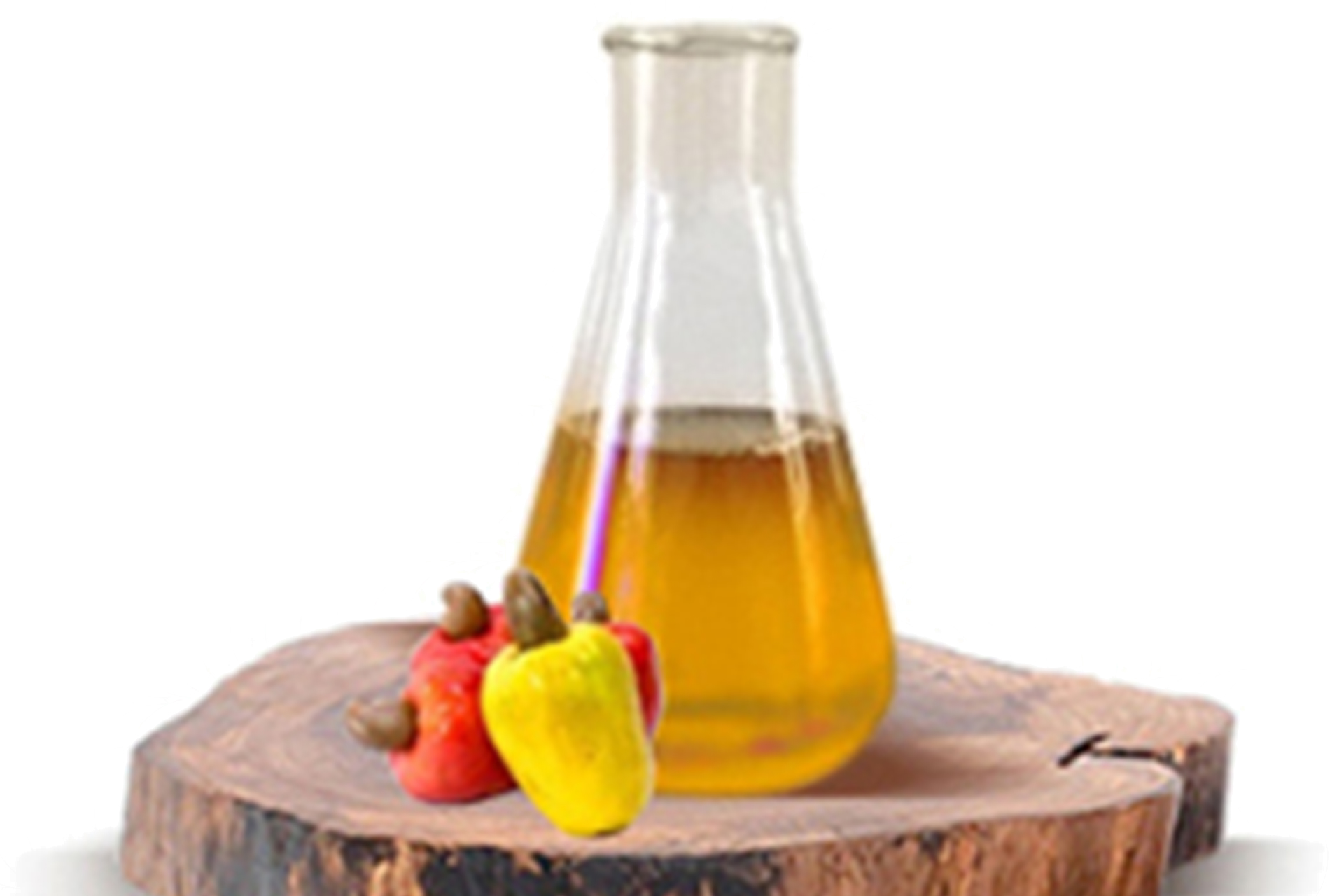
Cardanol
Cardanol is a natural, renewable organic compound derived from cashew nut shell liquid (CNSL), a byproduct of the cashew industry. It is primarily composed of anacardic acids, which are then decarboxylated to produce cardanol. It has a structure similar to phenol but with a long aliphatic side chain, which can be either saturated or unsaturated.
Uses of Cardanol:
- Resins and Coatings: Cardanol is widely used in the manufacture of phenolic resins and as a raw material in coatings, paints, and varnishes due to its excellent hydrophobic properties and flexibility.
- Polymer and Plastic Industry: It is utilized in the production of various polymers and as a plasticizer, providing chemical resistance and thermal stability.
- Friction Materials: Due to its friction-modifying properties, cardanol is used in the formulation of brake linings and clutch facings.
- Adhesives and Sealants: Its unique chemical properties make it a good candidate for use in adhesives and sealants.
- Surfactants and Emulsifiers: Modified cardanol derivatives are used in the manufacture of surfactants and emulsifiers.
Benefits:
- Eco-friendly: Being a natural product, cardanol is a sustainable alternative to petroleum-based phenols.
- Cost-effective: It is a byproduct of the cashew industry, making it relatively inexpensive compared to synthetic phenols.
- Versatile: The chemical structure of cardanol allows for a wide range of chemical modifications, making it suitable for various applications.

© Copyright 2019 All Rights Reserved by SSS Groups
Design with by RINIX WEB